June 26, 2026

Answering: What is the SEE Framework, how does it structure a session, and why does it matter for credibility?
Estimated reading time: 9 min read
If you are researching a registered somatic modality before you decide whether to book, the first thing worth understanding is the method itself, not the marketing around it. The approach in question is a complementary, consent-based practice that works through the visual system, using calibrated light and prism, and it has been accredited through the International Institute for Complementary Therapists (IICT) since 2019. It was created by Dr Michael Christian, who holds a PhD in integrative medicine, draws on 33 years of clinical practice and more than 43,680 documented sessions, and is board certified with the Board of Integrative Medicine in North America.
That modality is Quantum Photo Somatics, often shortened to QPS, and the structured process at the centre of every session is called the SEE Framework. People who reach this page usually want the same thing: a plain account of how the work is actually organised, so they can judge for themselves whether it is credible and whether it fits what they are experiencing. This explainer sets out what the SEE Framework is, what each of its three stages involves, how it connects to the wider methodology, and why a structured framework is a useful signal when you are weighing up an unfamiliar practice.
The SEE Framework, Defined
The SEE Framework is the three-stage clinical process used in every Quantum Photo Somatics session, where SEE stands for Sense, Enable and Enact. In plain terms, the practitioner first observes how the visual system is currently organising the body (Sense), then introduces calibrated light and prism to shift how visual information is processed (Enable), and finally allows the nervous system to integrate that new pattern (Enact). It is a structured sequence of observation and response, not a fixed protocol applied identically to everyone, and it describes a process the body undertakes rather than a treatment performed on it.
Key Insights
- The SEE Framework is the three-stage process behind every QPS session: Sense, Enable and Enact.
- It moves from qualitative observation of the visual system, to calibrated light and prism, to the body’s own integration of a new pattern.
- A defined framework, delivered within an IICT-registered modality, is a meaningful signal of structure and accountability rather than a claim of medical cure.
Keep reading for the complete explainer.
Table of Contents
- Stage One: Sense
- Stage Two: Enable
- Stage Three: Enact
- How SEE Connects to Phase Coherence
- Why a Defined Framework Matters for Credibility
Stage One: Sense
The first stage of the SEE Framework is Sense, and it is about observation before anything else happens. Rather than measuring how sharply you read a chart, Dr Christian assesses how your visual system is currently organising your posture, balance and spatial awareness. The question is not what you can see, but how your body arranges itself around what it sees. This is a qualitative reading of function, attending to the patterns a standard sight measurement is not designed to notice.
There is a sound physiological reason to start at the eyes. According to Victoria’s Better Health Channel, the somatic nervous system relays information from the eyes, ears, skin and muscle to the central nervous system, while the autonomic nervous system regulates organs and glands without conscious effort. The visual system, in other words, is continuously feeding the systems that govern balance, tension and the body’s automatic responses. The Sense stage treats the eyes as one input within that larger network, and reads how the rest of the body is responding to it.
- Sense is a qualitative assessment of how the visual system organises posture, balance and spatial awareness.
- It looks at how the body arranges itself around vision, not at sharpness of sight.
- It rests on the established link between the visual system and the wider nervous system.
Stage Two: Enable
The second stage is Enable, and this is where calibrated light and prism enter the work. Using precisely calibrated lenses and prisms, Dr Christian introduces shifts in how light enters the visual system. These are described not as conventional prescriptions but as calibrated activations: small, deliberate changes in how visual information is presented to the body. Some clients report noticing an immediate physical shift during this stage, a change in how they are holding themselves or how settled they feel, though these are descriptions of experience rather than guaranteed outcomes.
It is worth being precise about what Enable is and is not. It is not an attempt to correct sight in the optical sense, and QPS is not a substitute for optometric care. The purpose is to alter the input to the visual system briefly enough for the body to respond, so that the practitioner can observe how the wider system reorganises. The light and prism are tools for prompting a response, not instruments for fixing a fault, and the whole stage sits inside the consent framework that governs every QPS session, so you remain in control of what happens throughout.
- Enable introduces calibrated lenses and prisms as activations, not as conventional prescriptions.
- Its purpose is to shift visual input so the body’s response can be observed.
- Any shifts clients describe are shared as lived experience, never as guaranteed results.
Stage Three: Enact
The third stage is Enact, and it marks a deliberate shift in agency. As Dr Christian frames it, your body’s capacity to integrate the new pattern is activated; this is not something done to you, but something your system does once the conditions are right. The earlier stages set those conditions, and Enact is the body’s own process of consolidating the change introduced during Enable. The practitioner’s role here is to make space for that integration, not to drive it.
This is the part of the framework that explains why QPS describes its work as redirecting process rather than treating symptoms. A symptom-by-symptom approach addresses each complaint on its own terms. The SEE Framework, and Enact in particular, works with the body’s capacity to reorganise around a new pattern, on the view that several persistent experiences may share an underlying timing issue rather than being separate faults. The Better Health Channel notes that structured, body-based practices such as abdominal breathing can help regulate the nervous system and encourage the body to relax, a reminder that the nervous system is responsive to deliberate, body-based input. The Enact stage works in that same broad territory, with light and prism as its particular method.
- Enact is the body’s own integration of the pattern introduced during Enable.
- It reflects the QPS principle of redirecting process rather than chasing individual symptoms.
- The practitioner makes space for integration; the nervous system does the work.
How SEE Connects to Phase Coherence
The SEE Framework does not stand alone. It is the practical expression of a broader idea Dr Christian calls phase coherence, which he defines as the coordinated timing between the visual, neurological and somatic systems. Coherence here is not about feeling calm, and it is not balance in the everyday sense. It is about timing: whether the body’s systems are arriving together or slightly out of step with one another. When systems fall out of phase, the result can be a cluster of persistent experiences that never resolve neatly into a single diagnosis, because they were never one problem to begin with.
Read in that light, the three stages form a coherent sequence. Sense reads how well the systems are currently coordinating. Enable introduces a calibrated input designed to support better timing. Enact is the body settling into a more coordinated state, which some clients report experiencing as a sense of being more present or more grounded. The SEE Framework sits alongside related concepts Dr Christian has developed, including the AIM Framework, Qualitivity and the Coherence Constant, each set out in plain language across the QPS materials. For the fuller picture, the frameworks and methodology pages explain how these ideas fit together, and the complete guide to the modality provides the wider context.
Explore the QPS frameworks or read the complete guide to Quantum Photo Somatics.
- Phase coherence describes the coordinated timing between visual, neurological and somatic systems.
- Sense reads coordination, Enable supports better timing, and Enact is the body settling into a more coordinated state.
- SEE sits within a wider set of frameworks, including AIM, Qualitivity and the Coherence Constant.
Why a Defined Framework Matters for Credibility
When you are researching an unfamiliar modality, a named, repeatable framework is a useful signal in its own right. It means the practitioner can describe what happens in a session, in what order and to what end, rather than improvising. The SEE Framework gives QPS that structure: a consistent sequence of Sense, Enable and Enact that applies across sessions while still adapting to the person in front of it. A practice that can articulate its method clearly is, at the very least, a practice you can evaluate on its own terms.
Structure is reinforced by registration. Quantum Photo Somatics has been registered with the IICT since 2019, drawn from a list of more than 1,400 approved complementary therapies, and in Australia IICT members access professional indemnity and public liability insurance through the institute’s insurance partner. Dr Christian is also an executive member of the IICT, which places him inside the body that governs the standards rather than merely listed against them. None of this is a claim of medical efficacy. There are no randomised controlled trials presenting QPS as a proven medical treatment, and the modality does not pretend otherwise. What a defined framework inside a registered modality establishes is that the work is structured, accountable and explainable, which is often exactly what a careful researcher is looking for.
- A named framework lets you evaluate the method before you book, because the practitioner can describe it clearly.
- QPS has been IICT-registered since 2019, within a list of more than 1,400 approved modalities.
- A defined framework signals structure and accountability, not a claim of medical cure.
Frequently Asked Questions
Q: What does SEE stand for in the SEE Framework?
A: SEE stands for Sense, Enable and Enact, the three stages of the clinical process used in every Quantum Photo Somatics session. Sense is a qualitative observation of how the visual system is organising posture, balance and spatial awareness. Enable introduces calibrated light and prism to shift how visual information is processed. Enact is the body’s own integration of that new pattern. Together they describe a structured sequence rather than a fixed protocol applied identically to everyone.
Q: Is the SEE Framework a medical treatment?
A: No. QPS is a complementary somatic modality, not a medical treatment, and the SEE Framework does not claim to cure or treat any condition. There are no randomised controlled trials presenting it as a proven medical therapy. It is designed to sit alongside your existing medical, optometric or psychological care, never to replace it. Any experiences clients describe during the stages are shared as lived experience, not as guaranteed outcomes.
Q: Does the SEE Framework involve touch?
A: Touch is always optional in QPS, and every stage of the SEE Framework is governed by a clear consent framework, so you remain in control throughout. The work centres on calibrated light and prism and on how your visual system interacts with the rest of your body, rather than on physical manipulation. This makes the modality accessible to people for whom hands-on therapy is uncomfortable or unsuitable.
Q: How is the SEE Framework different from an eye assessment?
A: The SEE Framework is not concerned with how sharply you read a chart. Where a conventional sight measurement asks what you can see, the Sense stage asks how your body organises itself around what it sees, attending to posture, balance and spatial awareness. The calibrated light and prism used in the Enable stage are framed as activations to prompt a response, not as prescriptions to correct sight. QPS is complementary to, and not a substitute for, optometric care.
Want to Learn More?
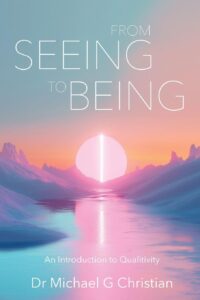
The SEE Framework is one part of a methodology built over more than three decades of clinical practice, a doctorate in integrative medicine, and two published books, including From Seeing to Being, released in 2025. If you would like to understand the thinking behind the modality, the methodology and frameworks pages set it out in plain language, written for people who want to understand before they decide.
Citations
- “QPS Methodology and the SEE Framework”: The Quantum Photo Somatics methodology pages set out the SEE Framework as the three-stage clinical process, Sense, Enable and Enact, used in every session, the primary source for how the framework is defined. https://quantumphotosomatics.com/methodology/
- “Nervous system, Better Health Channel”: Victoria’s state health information service explains that the somatic nervous system relays information from the eyes to the central nervous system, and the autonomic nervous system regulates organs without conscious effort, the physiological basis for working through the visual system. https://www.betterhealth.vic.gov.au/health/conditionsandtreatments/nervous-system
- “IICT Approved Modalities”: The International Institute for Complementary Therapists confirms that an approved modality has been assessed and is eligible for professional membership and insurance, from a list of more than 1,400 therapies. This is the body with which QPS has been registered since 2019. https://www.myiict.com/approved-modalities/
As a registered modality, QPS operates within the IICT professional code of conduct and the general standards that apply to complementary therapy advertising in Australia, which require that no therapeutic claims of cure or treatment be made.
✓Verified