June 26, 2026

Answering: What is this registered somatic modality, how does it work, and who is it for?
Estimated reading time: 10 min read
It is a registered complementary somatic modality that uses calibrated light and prism to bring the visual system, the nervous system and the body into closer working order, and it has been accredited through the International Institute for Complementary Therapists (IICT) since 2019. Developed across 33 years of clinical practice and more than 43,680 documented sessions with clients from over eight countries, it offers a structured, consent-based approach for people whose experience has been hard to explain through conventional, one-system-at-a-time care. The method was created by Dr Michael Christian, PhD, who holds a doctorate in integrative medicine and is board certified with the Board of Integrative Medicine in North America.
This modality is called Quantum Photo Somatics, often shortened to QPS. If you have arrived here after a long run of tests, appointments and explanations that never quite fit together, you are not alone. Many people reach a body-based approach only after the usual paths have been exhausted, and they want to understand what something actually is before they consider it.
The reality is that QPS is not a quick fix and it does not replace medical, optometric or psychological care. It is a complementary modality, which means it is designed to sit alongside the care you already receive, not in place of it. What it offers is a different lens on a familiar problem: the idea that some persistent experiences are less about a single broken part and more about timing, about how the body’s systems coordinate with one another.
This guide explains what QPS is, how it works, why its registration matters, who tends to seek it out, and what a first session involves. It is written so you can decide, calmly and with the facts in front of you, whether a conversation is worth your time.
Key Insights
- Quantum Photo Somatics is an IICT-registered complementary somatic modality, accredited since 2019, that works through the visual system to support coherence across the nervous system and body.
- It was created by Dr Michael Christian, PhD, and refined over 33 years of clinical practice and more than 43,680 documented sessions with clients from over eight countries.
- It is complementary and consent-based, with touch always optional. It is designed to sit alongside conventional care, never to replace it.
Keep reading for the complete guide.
Table of Contents
- What Quantum Photo Somatics Actually Is
- How It Works: Coherence, Not Symptom Chasing
- Why Its Registration Matters
- Who Quantum Photo Somatics Is For
- What a First Session Involves
What Quantum Photo Somatics Actually Is
Quantum Photo Somatics is a body-based, or somatic, modality. The word somatic simply means relating to the body, and somatic approaches work with the nervous system through the body rather than through conversation alone. What makes QPS distinct within that broad family is its entry point. Where many somatic methods begin with the breath, the spine or hands-on contact, QPS begins with the visual system, using calibrated light and prism as the tools of the work.
The visual system is a reasonable place to start, because it is more deeply wired into the body than most people assume. According to Victoria’s Better Health Channel, the somatic nervous system carries sensory information from the eyes, ears, skin and muscles to the central nervous system, and the autonomic nervous system regulates organs and glands without conscious effort. The eyes, in other words, are not a separate department. They are a constant stream of information feeding the systems that govern balance, tension and the body’s automatic responses.
QPS draws on this connection. Rather than measuring how sharply you read a chart, it is concerned with how your body organises itself around what you see. Dr Christian describes this quality of organisation through frameworks he has developed over decades, including phase coherence, the SEE Framework and the AIM Framework, each defined in plain terms before any specialist language is used. The aim is not to correct vision in the optical sense. It is to support the timing between the visual, neurological and somatic systems so they work together more smoothly.
- Somatic means relating to the body; QPS works with the nervous system through the visual system.
- Its tools are calibrated light and prism, not talk-based processing alone.
- Its focus is coordination and timing across systems, not sharpness of sight.
How It Works: Coherence, Not Symptom Chasing
The central idea in QPS is phase coherence, which Dr Christian defines as the coordinated timing between the visual, neurological and somatic systems. It is not the same as feeling calm, and it is not balance in the everyday sense. It is timing: whether the body’s systems are arriving together or slightly out of step with one another. When systems fall out of phase, the result can be a cluster of persistent experiences that never resolve neatly into one diagnosis, because they were never one problem to begin with.
This is why QPS frames its work as redirecting process rather than treating symptoms. The distinction matters, and it is deliberate. A symptom-by-symptom approach addresses each complaint on its own terms. A coherence approach asks whether several complaints share an underlying timing issue, and works at that level instead. Dr Christian has described this as attending to different legs of the same stool, rather than replacing one leg at a time.
In practice, this means a session may support the nervous system in settling into a more coordinated state, which some clients report experiencing as a sense of being more present or more grounded. These are descriptions of experience, not guaranteed outcomes, and QPS makes no claim to cure or treat any medical condition. The Better Health Channel notes that simple practices such as abdominal breathing can help regulate the nervous system and encourage the body to relax, a reminder that the nervous system is responsive to structured, body-based input. QPS works in that same broad territory, using light and prism as its particular method.
- Phase coherence describes the timing between visual, neurological and somatic systems.
- QPS aims to redirect process across systems rather than chase individual symptoms.
- Client experiences are described as lived experience, never as guaranteed results.
Why Its Registration Matters
In a field where many practices operate with no external oversight, registration is one of the clearest signals of legitimacy a person can look for. Quantum Photo Somatics has been registered with the International Institute for Complementary Therapists since 2019. The IICT describes an approved modality as one that has been assessed and approved by its insurance partners and is eligible for professional membership and insurance cover, drawn from a list of more than 1,400 approved complementary therapies, the most comprehensive in the world.
That registration carries practical weight. In Australia, IICT members access professional indemnity and public liability insurance through BMS, the institute’s insurance partner. For a prospective client, this means QPS is not an improvised practice but a recognised modality delivered within an accountable framework, with the professional infrastructure that recognition requires. Dr Christian is also an executive member of the IICT, which places him inside the body that governs the standards, not merely listed against them.
Registration is not the same as a claim of medical efficacy, and QPS is careful not to confuse the two. There are no randomised controlled trials presenting QPS as a proven medical treatment, and the modality does not pretend otherwise. What registration does establish is that QPS sits within a defined, insured, internationally recognised category of complementary practice, governed by a professional code of conduct. For someone deciding whether a practice is credible, that distinction between recognised and unaccountable is often the one that matters most.
- QPS has been IICT-registered since 2019, within a list of 1,400-plus approved modalities.
- Registration provides professional indemnity and public liability insurance through BMS in Australia.
- Registration signals recognised, accountable practice, not a claim of medical cure.
Who Quantum Photo Somatics Is For
Quantum Photo Somatics tends to attract people who have already tried a great deal. Many arrive after a long sequence of appointments for experiences such as unexplained dizziness, a sense of visual overwhelm in busy environments, persistent tension, or a feeling of being subtly out of step with their own body, often after tests have come back clear. The common thread is not a particular condition but a particular situation: the experience is real, it persists, and the usual one-system explanations have not accounted for it.
QPS is also designed to be accessible to people for whom other body-based work is not suitable. Because touch is always optional and every session is governed by a clear consent framework, the modality is open to those who find hands-on therapy difficult, including people for whom touch-based or talk-based approaches have not felt right. This is a deliberate feature of the work, not an afterthought, and it is one reason QPS describes itself as a modality where touch is optional and always consent-based.
It is equally important to be clear about who QPS is not for, at least not on its own. It is not a replacement for medical diagnosis or treatment, for optometric care, or for psychological therapy. Many clients continue their conventional care alongside QPS, and that is exactly how the modality is intended to be used. If you are seeking a single cure for a defined medical condition, QPS is not that. If you are seeking a structured, complementary way to address how your systems coordinate, it may be worth a conversation.
- Common reasons people seek QPS include unexplained dizziness, visual overwhelm and persistent tension after clear tests.
- Touch is optional and consent-based, making the work accessible to those for whom hands-on therapy is unsuitable.
- QPS is complementary; it works alongside medical, optometric and psychological care, never instead of it.
What a First Session Involves
The first step into Quantum Photo Somatics is a one-hour, in-person session in Melbourne CBD called a Quansultation. It is a conversation and an exploration rather than a treatment, and its purpose is clarity: by the end of the hour, you should understand whether QPS is a fit for what you are experiencing. There is no referral required and no commitment beyond the single session, which is deliberate, because the modality is built on giving people enough information to make their own decision.
During a Quansultation, Dr Christian explores how your visual system interacts with your sense of balance, movement and overall state, using light and prism as part of that exploration. Because consent governs every session, you remain in control of what happens throughout, and touch is never assumed. The tone is calm and unhurried, and the emphasis is on understanding your particular pattern rather than fitting you to a standard protocol.
For a deeper look at the frameworks behind the work, you can visit the methodology pages to explore how QPS approaches coherence, and read more about Dr Christian’s background and the path that led to the modality. Quantum Photo Somatics is registered with the IICT and governed by its professional code of conduct, and across 33 years of practice and more than 43,680 documented sessions it has remained, at its heart, a structured and respectful way of paying attention to how the body organises itself around what it sees.
Frequently Asked Questions
Q: What is Quantum Photo Somatics in simple terms?
A: Quantum Photo Somatics is a registered complementary somatic modality that works through the visual system, using calibrated light and prism, to support coherence between the eyes, the nervous system and the body. It has been registered with the International Institute for Complementary Therapists since 2019, and it was developed by Dr Michael Christian over 33 years of clinical practice. It is complementary, which means it is designed to sit alongside your existing medical, optometric or psychological care rather than replace it.
Q: Is Quantum Photo Somatics a medical treatment or a proven cure?
A: No. QPS is a complementary modality, not a medical treatment, and it does not claim to cure or treat any condition. There are no randomised controlled trials presenting it as a proven medical therapy. What it offers is a structured, registered, consent-based approach that many people use alongside conventional care. Any experiences clients describe are shared as lived experience, not as guaranteed outcomes.
Q: Does Quantum Photo Somatics involve touch?
A: Touch is always optional in QPS, and every session is governed by a clear consent framework, so you remain in control throughout. This makes the modality accessible to people for whom hands-on therapy is uncomfortable or unsuitable. The work centres on light and prism and on how your visual system interacts with the rest of your body, rather than on physical manipulation.
Q: How do I start with Quantum Photo Somatics in Melbourne?
A: The starting point is a one-hour, in-person Quansultation in Melbourne CBD with Dr Michael Christian. No referral is needed and there is no commitment beyond that first session. Its purpose is to give you clarity about whether QPS suits what you are experiencing, so you can make an informed decision with the facts in front of you.
Want to Learn More?
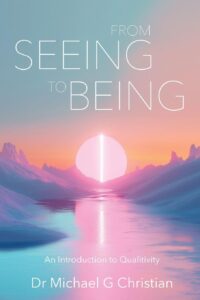
Quantum Photo Somatics is the result of more than three decades of clinical practice, a doctorate in integrative medicine, and two published books, including From Seeing to Being, released in 2025. If you would like to understand the thinking behind the modality, the methodology and frameworks pages set it out in plain language, written for people who want to understand before they decide.
Citations
- “IICT Approved Modalities”: The International Institute for Complementary Therapists confirms that an approved modality has been assessed and is eligible for professional membership and insurance, from a list of more than 1,400 therapies. This is the body with which QPS has been registered since 2019. https://www.myiict.com/approved-modalities/
- “Nervous system, Better Health Channel”: Victoria’s state health information service explains that the somatic nervous system carries sensory information from the eyes to the central nervous system, and the autonomic nervous system regulates the body without conscious effort, the physiological basis for working through the visual system. https://www.betterhealth.vic.gov.au/health/conditionsandtreatments/nervous-system
- “Breathing to reduce stress, Better Health Channel”: The same Victorian Government service notes that structured, body-based practices such as abdominal breathing help regulate the nervous system and encourage the body to relax, situating somatic work within recognised health guidance. https://www.betterhealth.vic.gov.au/health/healthyliving/breathing-to-reduce-stress
As a registered modality, QPS operates within the IICT professional code of conduct and the general standards that apply to complementary therapy advertising in Australia, which require that no therapeutic claims of cure or treatment be made.
✓Verified