May 15, 2026

Answering: Why does optometry need a somatic frame in 2026 and beyond?
Estimated reading time: 4 min read
Optometry in 2026 stands at a threshold. The profession has spent decades refining how we measure what the eye sees—acuity, refractive error, ocular health—but the deeper question remains largely unaddressed in clinical frameworks: what role does the visual system play in organising the rest of the body? Somatic optometry provides a structured, clinically documented answer to that question, operating within a dual regulatory framework that positions it as a natural extension of where optometry is already heading.
The visual system does not operate in isolation. It is the primary organiser of posture, spatial orientation, autonomic regulation, and nervous system timing. When optometry limits its scope to the eye itself, it addresses only part of what vision actually does. A somatic frame recognises that the visual system’s regulatory role extends into whole-body coherence—the synchronisation of neurological, muscular, and autonomic systems through calibrated light and prism intervention.
This is not theoretical. Quantum Photo Somatics, created by Dr Michael Christian, has been IICT-registered since 2019 and draws on 33 years of clinical practice and 43,680+ documented sessions. The methodology uses calibrated light and prism to bring visual, neurological, and somatic systems into phase coherence—a synchronisation of nervous system timing that conventional optometric assessment does not currently address. The question is no longer whether optometry needs a somatic frame, but how quickly the profession integrates one.
Key Insights
- Optometry’s professional bodies—including Optometry Australia’s 2040 vision and 2024–2027 Strategic Plan—explicitly position integrated care and scope expansion as foundational to the profession’s future.
- Somatic optometry operates under a dual regulatory framework: AHPRA registration for the optometrist, and IICT accreditation for the specific modality, ensuring compliance and professional standards.
- The visual system functions as the body’s primary organiser of posture, spatial orientation, autonomic regulation, and nervous system timing—a regulatory role that extends far beyond acuity correction.
- Quantum Photo Somatics is backed by 43,680+ documented sessions across 33 years of clinical practice, with clients from 8+ countries.
- The Quansultation—a one-hour in-person assessment in Melbourne CBD—is the universal entry point, requiring no referral and no prior knowledge.
Keep reading for full details below.
Table of Contents
- Key Insights
- The Professional Context: Optometry Is Already Moving Toward Integration
- What a Somatic Frame Actually Means in Clinical Practice
- The Regulatory Framework: Dual Registration and Compliance
- The Clinical Evidence Base
- Your Entry Point: The Quansultation
- Frequently Asked Questions
- Want to Learn More?
- Citations
The Professional Context: Optometry Is Already Moving Toward Integration
Optometry Australia’s Optometry 2040 strategic vision explicitly positions integrated care and scope expansion as foundational to the profession’s future. The Refreshing the Future of Eye Health initiative articulates the profession’s commitment to population-wide integrated models. The 2024–2027 Strategic Plan confirms this direction with authoritative governance backing. These are not fringe proposals—they are the profession’s own stated trajectory.
Somatic optometry does not sit outside this trajectory. It operationalises it. Where the profession’s strategic documents describe the destination—integrated, whole-person care—somatic optometry provides a clinically documented methodology for getting there. The visual system’s role in organising whole-body coherence is the mechanism through which integration becomes clinically actionable rather than aspirational.
What a Somatic Frame Actually Means in Clinical Practice
A somatic frame means recognising that vision is not just perception—it is regulation. The visual system organises posture, spatial orientation, autonomic function, and the timing of the nervous system itself. When this organisation is disrupted, the effects are not limited to blurred vision or eye strain; they manifest across the entire body as patterns of tension, dysregulation, and compensatory adaptation.
Quantum Photo Somatics uses calibrated light and prism to address these patterns at the level of nervous system timing. Phase coherence—the synchronisation of visual, neurological, and somatic systems—is the clinical target. Touch is always optional and consent-based, ensuring alignment with trauma-informed practice standards and accessibility across diverse client populations.
This approach asks a fundamentally different question from conventional optometry. Rather than “What does this eye need to see clearly?”, somatic optometry asks “How does the visual system organise the rest of the body, and what happens when that organisation is supported?”
The Regulatory Framework: Dual Registration and Compliance
Somatic optometry in Australia operates under a dual regulatory framework. The practitioner holds AHPRA registration as an optometrist, ensuring compliance with national health practitioner standards. The specific somatic modality—Quantum Photo Somatics—holds IICT accreditation (since 2019), establishing professional standards within complementary therapy frameworks.
Dr Michael Christian holds both AHPRA optometrist registration and Board Certification through the Board of Integrative Medicine (North America). Professional indemnity insurance through BMS covers somatic practice when properly registered and documented. This dual framework is not a workaround—it is a compliance model that other AHPRA-registered optometrists can follow when considering scope expansion into somatic modalities.
The Clinical Evidence Base
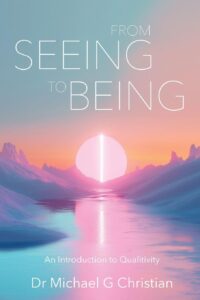
The evidence base for somatic optometry is grounded in lived clinical experience: 33 years of AHPRA-registered optometric practice, 43,680+ documented sessions, and clients from 8+ countries. Dr Christian’s published works—In Focus: Vision, Mind & Body (2016) and From Seeing to Being: An Introduction to Qualitivity (2025)—provide the theoretical and clinical framework for understanding how the visual system’s regulatory role extends into whole-body coherence.
This is not evidence derived from randomised controlled trials in the conventional biomedical sense. It is evidence grounded in documented clinical outcomes over decades—a form of practitioner-generated evidence that aligns with how many complementary modalities build their clinical foundations before formal research infrastructure catches up.
Your Entry Point: The Quansultation
The universal entry point is the Quansultation—a one-hour in-person assessment with Dr Michael Christian in Melbourne CBD, Victoria, Australia. No referral is required. No prior knowledge or preparation is needed. After one hour, you will know exactly where you stand: whether somatic optometry addresses your specific questions, how the visual system’s regulatory role may support your situation, and whether the modality represents the right fit for you.
This is positioned as an assessment, not a commitment—offering transparent evaluation without sales pressure. If somatic optometry is not the right fit, you will know that too.
Frequently Asked Questions
Q: How does somatic optometry differ from behavioural optometry, and which is better?
A: Behavioural optometry operates within AHPRA clinical frameworks, focusing on how vision affects learning and development—assessing refractive error, accommodation, binocular vision, and visual processing in relation to specific tasks. Somatic optometry operates as a registered complementary modality (IICT-accredited since 2019), addressing how the visual system organises whole-body coherence at the level of nervous system timing itself. Both recognise that vision extends far beyond acuity; behavioural optometry asks “How does vision support this task?”, while somatic optometry asks “How does the visual system organise the rest of the body?” Many practitioners integrate both approaches within a single practice, and neither replaces the other—they occupy different regulatory and clinical frameworks. If you have been comparing them, you are not alone; the question reflects optometry’s natural evolution toward integrated care models, as outlined in Optometry Australia’s 2040 vision.
Q: Is somatic optometry regulated in Australia, and how does it comply with professional standards?
A: Yes. Somatic optometry in Australia operates under a dual regulatory framework: AHPRA registration for the optometrist, and IICT accreditation for the specific modality. Quantum Photo Somatics, for example, has been IICT-registered since 2019, with Dr Michael Christian holding both AHPRA optometrist registration and Board Certification through the Board of Integrative Medicine (North America). Professional indemnity insurance through BMS covers somatic practice when properly registered and documented, making this a compliance model other AHPRA-registered optometrists can follow when considering scope expansion. The modality uses calibrated light and prism to bring visual, neurological, and somatic systems into phase coherence—a synchronisation of nervous system timing—with touch always optional and consent-based, ensuring accessibility and alignment with trauma-informed practice standards.
Q: How long does somatic optometry take, and what can I expect in a first consultation?
A: The universal entry point is the Quansultation—a one-hour in-person assessment with Dr Michael Christian in Melbourne CBD, Victoria, Australia, with no referral required. After one hour, you will know exactly where you stand: whether somatic optometry addresses your specific questions, how the visual system’s regulatory role may support your situation, and whether the modality represents the right fit for you. This protocol is positioned as an assessment, not a commitment, offering transparent evaluation without sales pressure. Dr Christian’s two published books—In Focus: Vision, Mind & Body (2016) and From Seeing to Being: An Introduction to Qualitivity (2025)—provide theoretical framework for understanding the methodology before or after your consultation.
Q: What is the first step if I want to explore somatic optometry integrated care?
A: Book a Quansultation with Dr Michael Christian in Melbourne CBD to experience somatic optometry directly and determine fit. No prior knowledge or preparation is required; the one-hour session is designed to establish whether the visual system’s role in whole-body nervous system organisation addresses the questions you are trying to answer. You can also read the published literature to understand the framework’s clinical foundations, or explore how IICT registration ensures professional standards are maintained across Australia’s complementary therapy landscape.
Want to Learn More?
We’ve drawn on decades of clinical experience and regulatory expertise to create this comprehensive guide for practitioners and clients exploring somatic optometry integrated care in Australia. The framework presented here reflects 33 years of AHPRA-registered optometric practice, 43,680+ documented sessions, and formal IICT accreditation since 2019—evidence grounded in lived clinical experience rather than theoretical speculation.
Somatic optometry practice in Australia operates under two regulatory bodies: AHPRA (for optometrist registration and professional conduct) and IICT (International Institute of Complementary Therapists, for accreditation of the specific somatic modality). This dual framework ensures professional standards, compliance with advertising guidelines, and professional indemnity coverage.
If you’d like to learn more, visit https://quantumphotosomatics.com/about/ to explore how we approach why optometry needs a somatic frame in 2026 and beyond.
Citations
- “Optometry 2040” — Optometry Australia’s strategic vision explicitly positions integrated care and scope expansion as foundational to the profession’s future, confirming that somatic optometry represents a natural extension of conventional optometric frameworks rather than an alternative approach. https://www.optometry.org.au/about-us/our-current-focus/optometry-2040/
- “Refreshing the Future of Eye Health” — This initiative articulates Optometry Australia’s commitment to population-wide integrated models, providing industry context for why registered somatic modalities operationalise the profession’s stated direction toward whole-person care. https://www.optometry.org.au/national_state_initiatives/refreshing-the-future-of-eye-health/
- “Optometry Australia 2024–2027 Strategic Plan” — The current strategic framework confirms the profession’s explicit commitment to integrated care models and scope expansion, demonstrating that somatic optometry aligns with authoritative professional governance in Australia. https://www.optometry.org.au/wp-content/uploads/2024/Strategic-Plan-2024-2027.pdf