July 19, 2026

Answering: Is there a gentle, body-based option for a highly sensitive person who finds usual therapy settings too much?
Estimated reading time: 9 min read
If you are a highly sensitive person, you have probably learned to read a room the moment you walk into it, and to feel the cost of a loud, bright, crowded one long after you have left. That same sensitivity can make the usual routes to help harder than they sound. A busy waiting room, fluorescent light, a therapist sitting close and asking you to talk for an hour, or hands-on bodywork that assumes touch is welcome, can each be a lot before any of the actual work begins. This is an honest look at whether a quieter, touch-optional, consent-led approach called Quantum Photo Somatics may suit you. It is a complementary modality, registered with the International Institute for Complementary Therapists (IICT) since 2019, and it does not treat high sensitivity or any condition. What it offers is a calmer setting and a different entry point into the body.
Before we go further, one thing needs saying plainly, because it shapes everything else. Being a highly sensitive person is not a disorder, an illness or something to be fixed. It is a temperament trait, and this article treats it that way throughout. So the question here is not how to treat your sensitivity. It is whether a modality built around quiet, consent and the visual system happens to fit the way you are already wired.
Quantum Photo Somatics, often shortened to QPS, was developed by Dr Michael Christian across 33 years of clinical practice and more than 43,680 documented sessions. He is board certified with the Board of Integrative Medicine in North America. This guide explains what “highly sensitive” actually means, why standard therapy settings can overwhelm, how QPS is structured differently, and how to judge, calmly, whether it is worth an hour of your time.
Key Insights
- Being a highly sensitive person is a temperament trait, not a disorder, and Quantum Photo Somatics makes no claim to treat it or any condition.
- QPS is touch-optional, consent-led, quiet and one-to-one, and works through the visual system rather than through talk or hands-on contact, which may suit people who find busy, high-stimulation therapy settings overwhelming.
- It is IICT-registered and complementary, designed to sit alongside medical and psychological care, never to replace it. We say “may suit” and “may support” on purpose.
Keep reading for the complete guide.
Table of Contents
- What “Highly Sensitive Person” Actually Means
- Why Usual Therapy Settings Can Be Too Much
- How Quantum Photo Somatics Is Built Differently
- Working Through the Visual System, Not Talk or Touch
- Whether This Is Worth Exploring for You
What “Highly Sensitive Person” Actually Means
Definition: Highly Sensitive Person (HSP)
A highly sensitive person is someone with a more responsive nervous system that takes in and processes sensory and emotional information more deeply than most. In the research literature this is called sensory processing sensitivity, and it is understood as a normal temperament trait present in a meaningful minority of people, not a medical condition, mental illness or disorder. Highly sensitive people often notice subtleties others miss, feel things strongly, and reach the point of over-stimulation sooner in loud, bright or busy environments. The trait was described and named by psychologist Dr Elaine Aron. Being highly sensitive is not something to be treated or cured; it is simply a way of being wired, with real strengths as well as real thresholds.
It helps to hold two ideas together. The first is that high sensitivity is genuinely a trait, not a symptom. It travels with you, it is not an episode you recover from, and it is not a sign that something has gone wrong. The second is that a trait can still come with a cost in the wrong environment. A person who registers more, and registers it more deeply, will naturally reach saturation faster when the input keeps coming. Neither of those ideas cancels the other, and the honest picture needs both.
This matters here because it sets the boundary of what any complementary modality can honestly claim. QPS is not offered as a way to change your sensitivity, dial it down, or resolve it, and Dr Christian does not frame it that way. The most it can reasonably offer a highly sensitive person is a setting and a method that respect how you are already built, rather than working against the grain of it.
- High sensitivity, or sensory processing sensitivity, is a temperament trait, not a disorder.
- The trait brings depth of processing and strong responses, and earlier over-stimulation in intense settings.
- QPS does not aim to treat or change sensitivity; it aims to work with it respectfully.
Why Usual Therapy Settings Can Be Too Much
For a highly sensitive person, the barrier to getting help is often the setting rather than the help itself. Consider what a typical appointment can ask of a sensitive nervous system before the useful part even starts. A shared waiting room full of movement and noise. Overhead fluorescent lighting that hums and flickers at the edge of awareness. A stranger seated close, holding steady eye contact, inviting an hour of continuous talking about the hardest things. For many people this is unremarkable. For a highly sensitive person it can be a stack of small over-stimulations that leaves little capacity for anything else.
There is a physiological reason a demanding environment lands so hard, and it is not imagined. Victoria’s Better Health Channel explains that the somatic nervous system relays information from the eyes, ears, skin and muscles to the central nervous system, while the autonomic nervous system regulates the body without any conscious effort on our part. A nervous system that takes in more sensory information, and processes it more deeply, is doing more work in a busy room by definition. When the input is relentless, the body can tilt toward alertness and stay there, which is exactly the state in which reflective, talk-based work becomes hardest to do.
Hands-on approaches can raise a separate barrier. Bodywork and many somatic methods begin from touch, sometimes with consent treated as a quick formality rather than an ongoing choice. For a highly sensitive person, or for anyone whose sensitivity includes a strong response to physical contact, the prospect of being touched can itself be the thing that keeps them from trying. None of this means the mainstream options are wrong. It means the packaging can be a real obstacle for a particular kind of nervous system, and it is worth naming that plainly.
- The setting, waiting rooms, harsh light, close talk, is often the barrier, not the help itself.
- A more responsive nervous system does more sensory work in a busy environment and can stay tilted toward alertness.
- Touch-first bodywork can be a further obstacle for people who respond strongly to contact.
How Quantum Photo Somatics Is Built Differently
Quantum Photo Somatics is structured, almost point for point, around the things that tend to overwhelm a sensitive nervous system, and this is not accidental. It is a quiet, one-to-one, in-person session in Melbourne CBD, not a busy clinic floor. The pace is deliberately unhurried. And the two features a highly sensitive person is most likely to care about, touch and control, are built into the foundation of the work rather than added as reassurances.
Touch is optional, always. QPS is governed by a clear consent framework based on the Wheel of Consent, which treats consent as an ongoing, moment-to-moment agreement rather than a box ticked at the start. You remain in control throughout, you can pause, and nothing about contact is assumed. For a highly sensitive person, that is not a small courtesy. It removes the single most common reason people who respond strongly to touch avoid body-based work in the first place. You can read more about how that consent-led, touch-optional structure works in practice on the dedicated page for it.
The registration matters here too, quietly. Because QPS has been IICT-registered since 2019 and works within a professional code of conduct, a highly sensitive person is not being asked to trust an improvised practice or a big promise. They are dealing with a recognised, accountable, insured modality led by someone with 33 years of practice behind him. For people who feel things deeply and are wary of pressure or overreach, that steadiness is part of what makes the work approachable at all.
- Sessions are quiet, one-to-one, unhurried and in person in Melbourne CBD, not a busy clinic floor.
- Touch is optional and consent is ongoing, governed by the Wheel of Consent, so you stay in control throughout.
- IICT registration since 2019 means a recognised, accountable practice rather than an improvised one.
See how the no-touch, consent-led structure works
Working Through the Visual System, Not Talk or Touch
Here is where Dr Christian’s model becomes genuinely his own, and where it may speak directly to the highly sensitive experience. Most body-based methods begin with the breath, the spine or touch. QPS begins with the visual system, using calibrated light and prism as its tools. In his model, the eyes are one of the body’s largest and most constant streams of information about whether the world is safe, and much of what we experience as being overwhelmed is, he proposes, a question of timing between systems rather than a fault in any one of them.
He calls that timing phase coherence: the degree to which the visual, neurological and somatic systems are arriving together rather than slightly out of step. When they fall out of step, he argues, the body reads the mismatch itself as a low-grade threat and holds a background hum of alertness. For a highly sensitive person, who is already taking in a great deal through the eyes in a bright, busy world, an approach that works at the level of visual input rather than asking for more talk may feel like it meets them where the overload actually happens. His related supermarket-and-visual-overload piece walks through that everyday experience in detail.
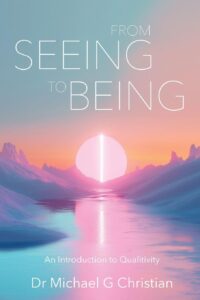
It is important to be exact about the status of this. Phase coherence, and the SEE and AIM frameworks Dr Christian works with, are his clinical model, grounded in decades of observation and set out in his two books, In Focus and the 2025 From Seeing to Being. They are not claims that have been through randomised controlled trials as a proven treatment for anything, and he does not present them as such. What he offers a highly sensitive person is a coherent, experience-tested lens and a gentle, non-verbal, touch-optional way to explore it. Any settling a client describes afterwards is shared as lived experience, not a promised outcome, and QPS is designed to sit alongside your medical and psychological care, never to replace it. The Better Health Channel notes that structured, body-based practices such as slow abdominal breathing can help calm the nervous system, a reminder that the nervous system does respond to gentle, deliberate input. QPS works in that same broad territory, through light rather than breath.
- QPS begins with the visual system and calibrated light and prism, not talk or touch.
- In Dr Christian’s model, overwhelm is partly a timing problem he calls a loss of phase coherence.
- Phase coherence, SEE and AIM are his clinical frameworks, not trial-proven medical treatments.
Whether This Is Worth Exploring for You
Quantum Photo Somatics tends to speak to highly sensitive people who want to work on how they feel in their body but have been put off by the settings on offer. If bright, crowded clinics drain you before anything useful happens, if an hour of continuous talking feels like more than you can give, or if the assumption of touch has quietly kept you away from bodywork, a quiet, consent-led, visually based approach may be worth an hour of your curiosity. The one-hour first session, called a Quansultation, is an exploration rather than a treatment, with no referral required and no commitment beyond that single hour.
Being clear about the limits is part of respecting a sensitive reader. QPS is not therapy for a mental-health condition, it is not a treatment for anything, and it is not a replacement for the care you already have. If you are in distress, or if what you are carrying is severe, the right first call is your GP or a mental-health service, and QPS would only ever sit alongside that. But if you are simply a person who feels the world keenly and wants a gentler, more respectful way into body-based work, led by someone who has thought about this for three decades and is careful about what he does and does not claim, a Quansultation is a low-pressure place to begin. Many clients continue seeing their GP or therapist while they explore it, which is exactly how it is meant to work.
Read about visual overload in everyday places
Frequently Asked Questions
Q: Is being a highly sensitive person a mental-health condition?
A: No. High sensitivity, described in the research as sensory processing sensitivity, is a temperament trait present in a meaningful minority of people, not a disorder, illness or diagnosis. It brings depth of processing and strong responses along with earlier over-stimulation in intense settings. Quantum Photo Somatics treats it as a trait, not a problem to be fixed, and makes no claim to treat or change it.
Q: Can Quantum Photo Somatics treat or cure high sensitivity?
A: No, and it does not try to. QPS is a complementary modality, not a medical treatment, and there are no randomised controlled trials establishing it as a proven therapy for anything. What it offers a highly sensitive person is a quiet, consent-led, touch-optional setting and a body-based method that may support the nervous system, alongside your existing medical and psychological care rather than in place of it.
Q: I find touch difficult. Will I have to be touched?
A: No. Touch is always optional in QPS, and every session is governed by an ongoing consent framework based on the Wheel of Consent, so you remain in control throughout and can pause at any point. The work centres on light and prism and on how your visual system interacts with the rest of your body, which is one of the main reasons the modality can suit people who respond strongly to physical contact.
Q: Why do you say “may suit” instead of promising it will help?
A: Because it is the honest and lawful description of what a complementary modality can offer, and because certainty is exactly what a serious practitioner cannot responsibly promise. Whether a quiet, visually based approach fits your particular sensitivity is precisely what a first Quansultation is designed to help you judge, calmly and without pressure. The careful language is a sign of a registered, accountable practice, not a lack of conviction about the work.
Want to Learn More?
Quantum Photo Somatics is the work of more than three decades of clinical practice, a doctorate in integrative medicine, board certification with the Board of Integrative Medicine, and two published books, including From Seeing to Being. If you want to understand the thinking behind it before you decide anything, the full guide sets out Dr Christian’s model in his own words, plainly and without pressure.
Understand the full QPS approach
Citations
- “Nervous system, Better Health Channel”: Victoria’s state health service explains that the somatic nervous system relays information from the eyes, ears, skin and muscles to the central nervous system, and the autonomic nervous system regulates the body without conscious effort, the physiological basis for a highly sensitive nervous system doing more work in a busy environment. https://www.betterhealth.vic.gov.au/health/conditionsandtreatments/nervous-system
- “Breathing to reduce stress, Better Health Channel”: The same Victorian Government service notes that structured, body-based practices such as slow abdominal breathing help calm the nervous system that controls the body’s involuntary functions, situating gentle somatic input within recognised health guidance. https://www.betterhealth.vic.gov.au/health/healthyliving/breathing-to-reduce-stress
- “IICT Approved Modalities”: The International Institute for Complementary Therapists confirms an approved modality is assessed and eligible for professional membership and insurance, drawn from a list of more than 1,400 therapies. This is the register QPS has held since 2019. https://www.myiict.com/approved-modalities/
The term highly sensitive person, and the related concept of sensory processing sensitivity, was described by psychologist Dr Elaine Aron and is characterised in that work as a normal temperament trait rather than a disorder. As a registered complementary modality, QPS works within the IICT code of conduct and the Australian standards that govern complementary-therapy advertising, which require that no claims of cure or treatment be made.
✓Verified