July 18, 2026

Answering: somatic therapy versus meditation, which suits nervous-system regulation, and how a Melbourne body-based option compares.
Estimated reading time: 9 min read
If you have leaned on a meditation app to steady your stress and found it helps your mind more than your body, you are asking a fair question: would a body-based, somatic approach suit you better? The honest answer is that this is not a contest. Meditation and mindfulness are well-evidenced, widely recommended, and genuinely valuable, and body-based somatic work is a different path that many people use alongside them, not instead of them. Quantum Photo Somatics (QPS) is one such body-based option, a complementary modality registered with the International Institute for Complementary Therapists (IICT) since 2019 and developed by Dr Michael Christian, PhD, across 33 years of clinical practice and more than 43,680 documented sessions. This guide compares the three so you can decide which fits where you are now.
Nervous-system regulation has become a popular phrase, and for good reason. Many people describe the same thing: the thinking mind can be talked down, yet the body stays braced. What follows lays out how meditation, body-based somatic work, and QPS specifically each approach that problem, what each is best suited to, and how to choose without being sold a false either-or.
Key Insights
- Meditation and mindfulness are well-evidenced and valuable for stress and anxiety; body-based somatic work is a complementary, not competing, path, and QPS is one registered option within it.
- QPS is an IICT-registered complementary modality created by Dr Michael Christian, PhD, board certified with the Board of Integrative Medicine in North America. It does not treat or cure anything and is designed to sit alongside your existing care.
- The choice is less “which is better” and more “which entry point suits how your stress shows up”, through the mind, through the body, or through the visual system.
Keep reading for the complete comparison.
Table of Contents
- Two Doors Into the Same Room
- Meditation vs Somatic Work vs QPS: A Side-by-Side
- When Each One Fits
- Where QPS Sits, in Dr Christian’s Words
- Choosing Without a False Either-Or
Two Doors Into the Same Room
Meditation and somatic work are often set against each other, but they are better understood as different doors into the same room: your nervous system. Victoria’s Better Health Channel describes the autonomic nervous system as the part of us that regulates organs and glands without any conscious effort, shifting between alertness and rest outside our awareness. When that system stays tilted toward alertness, the body keeps producing the physical signature of stress no matter what the thinking mind decides.
Meditation approaches that reality largely through attention. The Better Health Channel defines meditation as the deliberate focusing of attention to bring about feelings of calm and heightened awareness, and notes that regular practice offers benefits such as reduced stress and anxiety, with measurable changes in brain activity visible on EEG and MRI. That is a strong and well-documented foundation, and for a great many people it is enough on its own.
Body-based somatic work enters through a different door. Rather than beginning with attention or thought, it engages the nervous system through the body directly, through breath, movement, posture or sensation. Both doors lead to the same room. The question this article helps you answer is simply which door tends to open more easily for you.
- Meditation works primarily through attention and awareness, with strong evidence behind it.
- Somatic work engages the nervous system through the body rather than through thought.
- Neither replaces the other; many people find the two work well together.
Meditation vs Somatic Work vs QPS: A Side-by-Side
The table below sets the three approaches next to each other on the questions people actually ask: what is it, how does it work, who does it tend to suit, what is the evidence picture, and where do you start. Read it as three complementary options, not a ranking.
| Meditation & mindfulness | Body-based somatic work | Quantum Photo Somatics (QPS) | |
|---|---|---|---|
| What it is | A practice of deliberately focusing attention to bring about calm and awareness, as defined by the Better Health Channel. | A family of body-first approaches that engage the nervous system through breath, movement, posture or sensation rather than through talk alone. | A registered complementary somatic modality that works through the visual system, using calibrated light and prism, developed by Dr Michael Christian. |
| How it works | Trains attention so the mind settles; associated with reduced stress and measurable shifts in brain activity on EEG and MRI. | Uses body-based input, such as slower breathing, to influence the autonomic nervous system and encourage the body to relax. | In Dr Christian’s model, supports “phase coherence”, the timing between the visual, neurological and somatic systems, so the body has less reason to stay braced. |
| Where you do it | Self-directed, often via an app, class or recording; practised anywhere, anytime. | Usually guided by a practitioner, sometimes self-practised; may involve touch or movement. | In person, one-to-one, in Melbourne CBD; touch is always optional and every session is consent-led. |
| Who it tends to suit | People who find a regular, self-led practice sustainable and whose stress responds to calming the mind. | People for whom the body stays braced even after the mind has quietened, and who prefer a physical entry point. | People who have tried the usual routes and still feel out of step in the body, and who want a visual-system approach where touch is optional. |
| Evidence picture | Well-evidenced and widely recommended, with documented effects on stress and brain activity. | Body-based regulation, such as breathing to influence the nervous system, is supported by mainstream health guidance. | A registered complementary modality grounded in decades of clinical observation; no randomised controlled trials establish it as a proven treatment, and it makes no cure claim. |
| Where to start | A free or low-cost app, a local class, or a guided recording. | A session with a qualified somatic practitioner in your area. | A one-hour, in-person “Quansultation” in Melbourne CBD; no referral required. |
Read across the rows and a pattern appears. These are not rivals competing for the same job. They are three entry points, and the right one depends less on which is “best” and more on where your stress tends to lodge and what you can realistically sustain.
When Each One Fits
Here is a plainer way to hold the same information, framed as the situations each approach tends to suit. None of these rules out the others, and plenty of people combine them.
Meditation and mindfulness tend to fit when you are looking for a sustainable, self-directed practice, when calming the mind noticeably eases the rest of you, and when you want something free or low-cost that you can do anywhere, on your own schedule. Given its evidence base, it is a sensible first port of call, and for many people it does the job without anything further.
Body-based somatic work tends to fit when the mind quietens but the body stays braced, when talk and attention alone have not reached the physical bracing, and when you would rather begin with the body than with thought. It is often a next step people take when a purely mental approach leaves something unaddressed in the nervous system.
Quantum Photo Somatics tends to fit when you have already tried the usual routes, including meditation, and still feel subtly out of step in your body, when you are curious about a visual-system approach specifically, and when you value a registered, consent-led practice in which touch is always optional. It is not a replacement for meditation or for medical and psychological care, and Dr Christian is explicit that it is meant to sit alongside them.
Where QPS Sits, in Dr Christian’s Words
Within the broad family of body-based work, QPS begins somewhere unusual, and Dr Christian makes no apology for that. Where many somatic methods start with the breath or with touch, he starts with the visual system, on the grounds that the eyes are one of the body’s largest and most constant streams of information about whether the world is safe. The Better Health Channel notes that the somatic nervous system carries sensory information from the eyes to the central nervous system, which is the physiological hook his work hangs on.
His central idea is what he calls phase coherence. In his model, a good deal of persistent stress is a timing problem: the visual, neurological and somatic systems falling slightly out of step, so the body reads the mismatch itself as a low-grade threat and stays braced. Quantum Photo Somatics is the method he has built from that idea, using calibrated light and prism, alongside frameworks he has developed and named, including phase coherence, the SEE Framework and the AIM Framework. He describes the work as redirecting the body’s process rather than treating a symptom, and he proposes that supporting this timing may support the nervous system in settling.
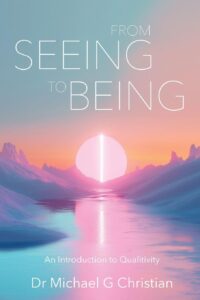
We should be equally clear about the status of this view. It is Dr Christian’s framework, grounded in 33 years of clinical practice and tens of thousands of documented sessions and set out across two books, In Focus and the 2025 From Seeing to Being. It is not a claim that has been through randomised controlled trials as a proven treatment, and he does not pretend it has. That is precisely why the language stays at “may support” rather than “treats” or “cures”. His registration with the IICT since 2019, his doctorate in integrative medicine, and his board certification with the Board of Integrative Medicine in North America place the work within an accountable, insured framework, which is a different thing from a claim of medical efficacy, and he keeps the two distinct.
- QPS enters through the visual system, which he argues is a major channel for the body’s sense of safety.
- He frames persistent stress as a loss of phase coherence, a timing mismatch between systems, and proposes his method may support that timing.
- This is his clinical model set out in two books, offered alongside conventional care, never as a trial-proven cure.
Choosing Without a False Either-Or
If you take one thing from this comparison, let it be that you are not being asked to pick a side. Meditation is well-evidenced and, for many people, entirely sufficient. If you have not given a consistent practice a genuine run, that is a reasonable and low-cost place to begin. Somatic work is there for when the body stays braced after the mind has settled. And QPS is a specific, registered, visual-system option within that body-based family, worth an hour of your curiosity if the usual routes have left something unaddressed.
A first step into QPS is a one-hour, in-person Quansultation in Melbourne CBD. It is an exploration rather than a treatment, with no referral required and no commitment beyond the single session. Its purpose is honesty: by the end of the hour you should have a clear sense of whether this approach speaks to what you are experiencing, and you are free to keep meditating, keep your existing care, and decide calmly from there.
Compare nervous-system regulation approaches in Melbourne
Frequently Asked Questions
Q: Is somatic work better than meditation for nervous-system regulation?
A: Neither is simply better. Meditation is well-evidenced and, for many people, enough on its own, working through attention to calm the mind. Body-based somatic work engages the nervous system through the body, which can help when the body stays braced after the mind has settled. They are complementary entry points, and many people use both. The right choice depends on how your stress shows up and what you can sustain, not on a ranking.
Q: Where does Quantum Photo Somatics fit between the two?
A: QPS is a specific body-based, or somatic, option, and an unusual one, because it works through the visual system using calibrated light and prism rather than through breath or touch. In Dr Christian’s model, it supports phase coherence, the timing between the visual, neurological and somatic systems. It is a complementary modality that sits alongside meditation and conventional care, not a replacement for either. It makes no claim to treat or cure.
Q: Can I keep using my meditation app if I try QPS?
A: Yes. QPS is designed to sit alongside whatever you already do, including a meditation practice and any medical or psychological care. There is no reason to stop meditating, and doing both is entirely consistent with how the modality is intended to be used. If anything, a settled attention practice and a body-based approach tend to complement one another.
Q: How do I start with QPS in Melbourne?
A: The starting point is a one-hour, in-person Quansultation in Melbourne CBD with Dr Michael Christian. No referral is needed and there is no commitment beyond that first session. Its purpose is to give you clarity about whether QPS suits what you are experiencing, so you can make an informed decision alongside the other approaches you are using.
Want to Learn More?
Quantum Photo Somatics is the work of more than three decades of clinical practice, a doctorate in integrative medicine, and two published books, including From Seeing to Being. If you want to understand the visual-system thinking behind it before deciding anything, the guides below set out Dr Christian’s model in plain language, written for people who want the facts before they choose.
Understand the full QPS approach
Why QPS works through the visual system, beyond breathwork and the vagus nerve
Citations
- “Meditation, Better Health Channel”: Victoria’s state health service defines meditation as the deliberate focusing of attention and notes that regular practice offers benefits such as reduced stress and anxiety, with measurable changes in brain activity, the evidence base behind the meditation column of the comparison. https://www.betterhealth.vic.gov.au/health/conditionsandtreatments/meditation
- “Nervous system, Better Health Channel”: The same Victorian Government service explains that the autonomic nervous system regulates the body without conscious effort and the somatic nervous system carries sensory information from the eyes to the central nervous system, the physiological basis for body-based and visual-system approaches. https://www.betterhealth.vic.gov.au/health/conditionsandtreatments/nervous-system
- “Breathing to reduce stress, Better Health Channel”: The same service notes that structured, body-based practices such as abdominal breathing help control the nervous system and encourage the body to relax, situating body-based somatic work within recognised health guidance. https://www.betterhealth.vic.gov.au/health/healthyliving/breathing-to-reduce-stress
As a registered complementary modality, QPS works within the IICT code of conduct and the Australian standards that govern complementary-therapy advertising, which require that no claims of cure or treatment be made.
✓Verified